| |  Discover De Profundis, harmonized for mixed voices by Ritz Rakotomalala. The composer's musical expression sublimates this monument of the liturgy. Discover De Profundis, harmonized for mixed voices by Ritz Rakotomalala. The composer's musical expression sublimates this monument of the liturgy. |
| | | 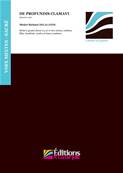 This sheet music can be performed by five and six mixed voice choirs, flutes, oboes, string instruments and basso continuo. Didier Godel reproduced the basso continuo. This is Michel-Richard Delalande’s famous motet. This composition is based on the text of Psalm 129 (also 130 with the new numbering) and of “Requiem aeternam.” It was written in 1689 for soloists (two sopranos, countertenors, tenors and baritones), five or six parts choirs, flutes, oboes, string instruments (two violin parts and two viola parts) and basso continuo (including cello, double bass, bassoon and organ). He is famous for his homophony and the intense and bold counterpoint in “Requiem aeternam” which was never performed in French music. The complete edition of this incredible choral work was reproduced by Didier Godel based on “Manuscrit Cauvin.” An instrumental version of this motet and Boyvin’s version of 1729 supervised by Colin de Blamont are included. Those two documents are based on the handwritten version by Delalande written by the work group of Philidor l’Aîné (1689). This sheet music can be performed by five and six mixed voice choirs, flutes, oboes, string instruments and basso continuo. Didier Godel reproduced the basso continuo. This is Michel-Richard Delalande’s famous motet. This composition is based on the text of Psalm 129 (also 130 with the new numbering) and of “Requiem aeternam.” It was written in 1689 for soloists (two sopranos, countertenors, tenors and baritones), five or six parts choirs, flutes, oboes, string instruments (two violin parts and two viola parts) and basso continuo (including cello, double bass, bassoon and organ). He is famous for his homophony and the intense and bold counterpoint in “Requiem aeternam” which was never performed in French music. The complete edition of this incredible choral work was reproduced by Didier Godel based on “Manuscrit Cauvin.” An instrumental version of this motet and Boyvin’s version of 1729 supervised by Colin de Blamont are included. Those two documents are based on the handwritten version by Delalande written by the work group of Philidor l’Aîné (1689). |
| | | 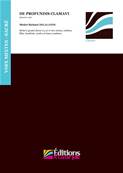 This sheet music can be performed by five and six mixed voice choirs, flutes, oboes, string instruments and basso continuo. Didier Godel reproduced the basso continuo. This is Michel-Richard Delalande’s famous motet. This composition is based on the text of Psalm 129 (also 130 with the new numbering) and of “Requiem aeternam.” It was written in 1689 for soloists (two sopranos, countertenors, tenors and baritones), five or six parts choirs, flutes, oboes, string instruments (two violin parts and two viola parts) and basso continuo (including cello, double bass, bassoon and organ). He is famous for his homophony and the intense and bold counterpoint in “Requiem aeternam” which was never performed in French music. The complete edition of this incredible choral work was reproduced by Didier Godel based on “Manuscrit Cauvin.” An instrumental version of this motet and Boyvin’s version of 1729 supervised by Colin de Blamont are included. Those two documents are based on the handwritten version by Delalande written by the work group of Philidor l’Aîné (1689). This sheet music can be performed by five and six mixed voice choirs, flutes, oboes, string instruments and basso continuo. Didier Godel reproduced the basso continuo. This is Michel-Richard Delalande’s famous motet. This composition is based on the text of Psalm 129 (also 130 with the new numbering) and of “Requiem aeternam.” It was written in 1689 for soloists (two sopranos, countertenors, tenors and baritones), five or six parts choirs, flutes, oboes, string instruments (two violin parts and two viola parts) and basso continuo (including cello, double bass, bassoon and organ). He is famous for his homophony and the intense and bold counterpoint in “Requiem aeternam” which was never performed in French music. The complete edition of this incredible choral work was reproduced by Didier Godel based on “Manuscrit Cauvin.” An instrumental version of this motet and Boyvin’s version of 1729 supervised by Colin de Blamont are included. Those two documents are based on the handwritten version by Delalande written by the work group of Philidor l’Aîné (1689). |
| | | 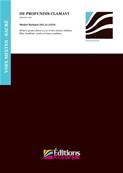 This sheet music can be performed by five and six mixed voice choirs, flutes, oboes, string instruments and basso continuo. Didier Godel reproduced the basso continuo. This is Michel-Richard Delalande’s famous motet. This composition is based on the text of Psalm 129 (also 130 with the new numbering) and of “Requiem aeternam.” It was written in 1689 for soloists (two sopranos, countertenors, tenors and baritones), five or six parts choirs, flutes, oboes, string instruments (two violin parts and two viola parts) and basso continuo (including cello, double bass, bassoon and organ). He is famous for his homophony and the intense and bold counterpoint in “Requiem aeternam” which was never performed in French music. The complete edition of this incredible choral work was reproduced by Didier Godel based on “Manuscrit Cauvin.” An instrumental version of this motet and Boyvin’s version of 1729 supervised by Colin de Blamont are included. Those two documents are based on the handwritten version by Delalande written by the work group of Philidor l’Aîné (1689). This sheet music can be performed by five and six mixed voice choirs, flutes, oboes, string instruments and basso continuo. Didier Godel reproduced the basso continuo. This is Michel-Richard Delalande’s famous motet. This composition is based on the text of Psalm 129 (also 130 with the new numbering) and of “Requiem aeternam.” It was written in 1689 for soloists (two sopranos, countertenors, tenors and baritones), five or six parts choirs, flutes, oboes, string instruments (two violin parts and two viola parts) and basso continuo (including cello, double bass, bassoon and organ). He is famous for his homophony and the intense and bold counterpoint in “Requiem aeternam” which was never performed in French music. The complete edition of this incredible choral work was reproduced by Didier Godel based on “Manuscrit Cauvin.” An instrumental version of this motet and Boyvin’s version of 1729 supervised by Colin de Blamont are included. Those two documents are based on the handwritten version by Delalande written by the work group of Philidor l’Aîné (1689). |
|
|